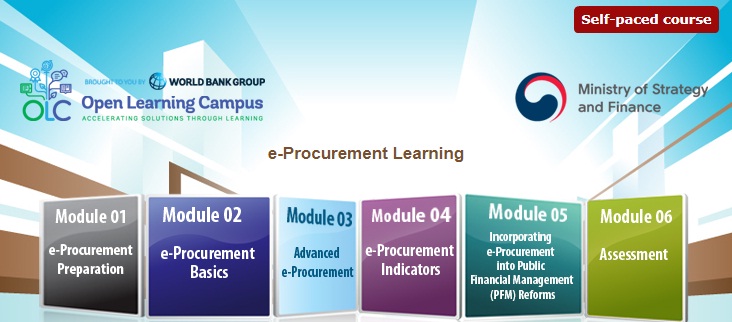
- e-Procurement Preparation
- e-Procurement Basics
- Advanced e-Procurement
- e-Procurement Indicators
- Incorporating e-Procurement into Public Financial Management (PFM) reforms
Target audience

Avalanche Academy
Course “Interchain Messaging”
In this course, you will learn how to build cross-L1 Solidity dApps with Interchain Messaging and Avalanche Warp Messaging.
Course Content
Interoperability
In the first section, we cover some basic concepts of interoperability in multi-chain systems. You will learn about examples of interoperability between blockchains and the terms “source,” “destination,” and “message.”
Avalanche Interchain Messaging
In this section, we learn what Avalanche Interchain Messaging is and what is abstracted away from the general dApp developer. You will also build your first cross-L1 dApps.
Securing Cross-Chain Communication
In this section, we look at techniques to secure cross-chain communication. We dive into signature schemes, multi-signature schemes, and the BLS multi-signature scheme.
Avalanche Interchain Messaging Protocol
Avalanche blockchains can natively interoperate between one another using AWM. You will learn about the AWM message format and how the message flow works.
Learning Outcomes
By the end of this course, students will:
Topics
Completion Certificate

Avalanche Academy
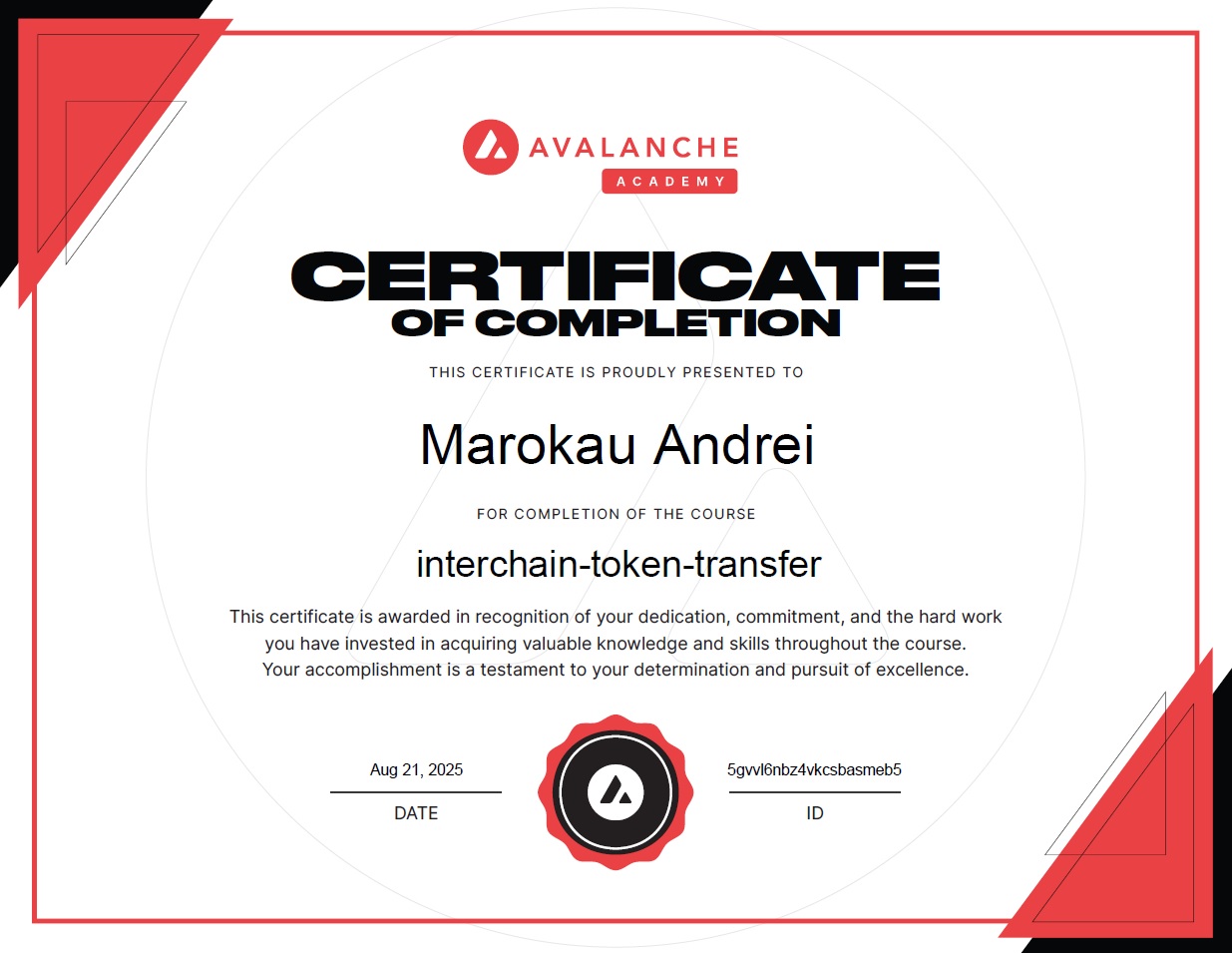
Course “Interchain Token Transfer”
In this course, you will learn how to transfer assets across multiple Avalanche blockchains with Avalanche Interchain Token Transfer ICTT.
Course Content
Getting Started with Interchain Token Transfer
In this section, you will learn how to use our Interchain Token Transfer toolbox to perform cross-chain operations. We’ll guide you through the process of using our user-friendly interface to deploy contracts, create bridges, and transfer assets across the testnet chains (Fuji C-Chain, Echo, and Dispatch).
Tokens and Token Types
In this section, you will learn about the different types of tokens that can be transferred between Avalanche blockchains. We will cover ERC-20 and native tokens and how to deploy and transfer them using our toolbox. Furthermore, you will learn what wrapped native tokens are and how they can be used to transfer assets between chains.
Token Bridging
Next we will talk about the high level concepts of token bridging and demonstrate how to use our toolbox to create and manage bridge contracts for cross-chain transfers between the testnet chains.
Interchain Token Transfer Architecture
In this chapter we will look at the design of Avalanche Interchain Token Transfer. You will learn about the file structure of the contracts and the concepts of the token home and token remote.
ERC-20 to ERC-20 Bridge Implementation
You will learn how to use our toolbox to deploy ERC-20 tokens and create bridges to transfer them between the testnet chains.
Multi-Chain Token Operations
Here you will learn about the concept of multi-hops and how to use our toolbox to bridge tokens between multiple testnet chains.
Native to ERC-20 Bridge Implementation
In this chapter you will learn how to use our toolbox to bridge a native token as an ERC-20 token to another testnet chain.
Send and Call Operations
In this chapter you will learn how to use our toolbox to call smart contracts with the tokens after sending them to another testnet chain.
Cross-Chain Token Swaps
In this chapter you will learn how to perform cross-chain token swaps between the testnet chains using our toolbox.
Learning Outcomes
By the end of this course, you will:
Topics
Completion Certificate
Avalanche Academy
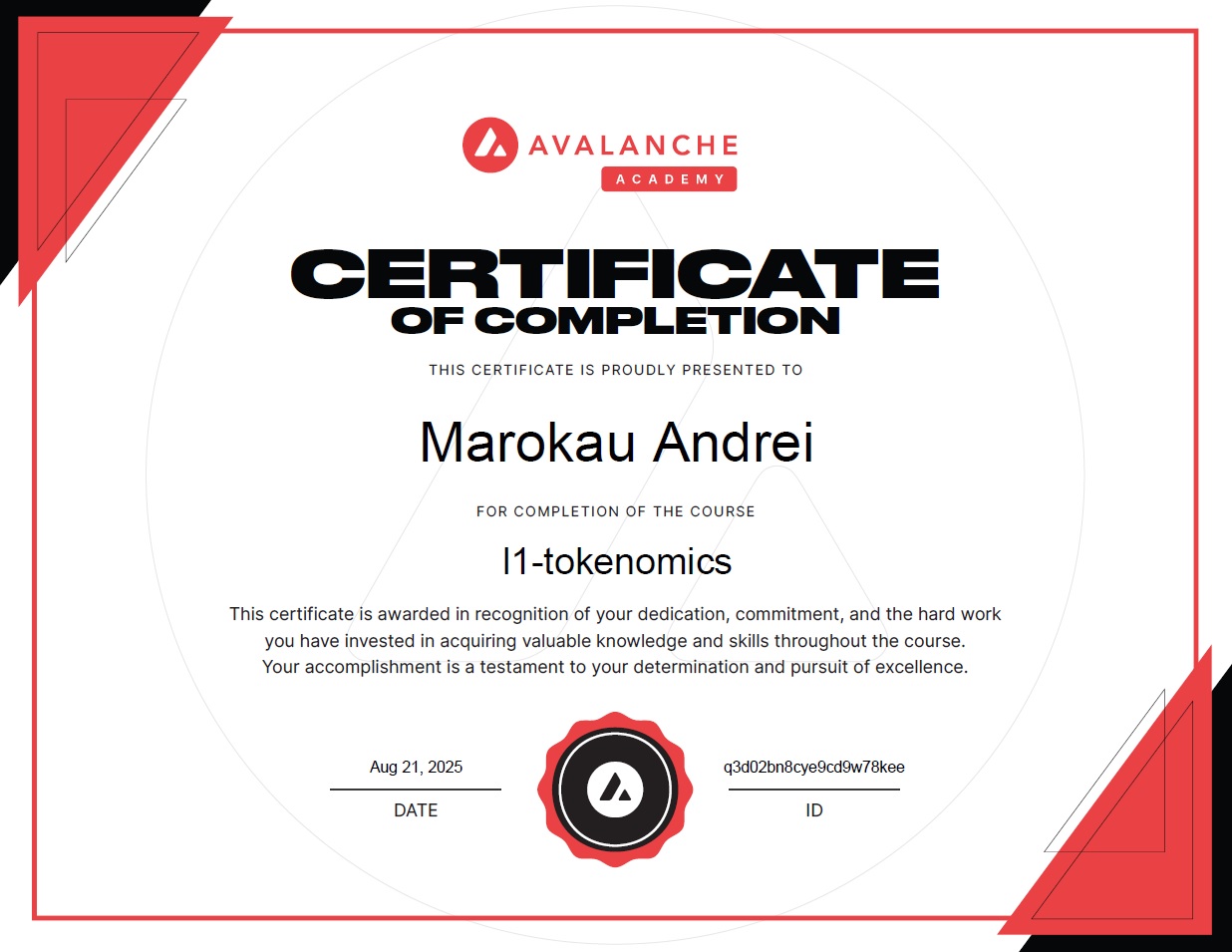
Course “L1 Tokenomics”
This course is designed to give you a deep understanding of tokenomics, including the creation, distribution, utility, and governance of tokens within blockchain ecosystems. By the end of this course, you will have practical skills in managing tokens across multi-chain ecosystems, configuring transaction fees, and designing staking and governance models.
Course Content
Basics
Learn the fundamentals of tokenomics, including native tokens, ERC-20 tokens, wrapped tokens, and how token decimals affect transactions and supply.
Native Tokens
Explore how to create custom native tokens, use Avalanche’s native token minter, and integrate ERC-20 tokens as native tokens in cross-chain environments.
Multi-Chain Ecosystems
Delve into interchain token transfers and cross-chain functionality, using both ERC-20 and native tokens across multiple blockchains.
Staking
Understand staking tokens, liquid staking, and how to deploy staking contracts, with a focus on post-Etna upgrade features.
Transaction Fees
Master transaction fee configuration, dynamic fee models, and learn how to distribute fees effectively within decentralized ecosystems.
Token Distribution
Learn about initial token allocation, advanced vesting schedules, bonding curves for token pricing, and how to implement airdrops.
Governance
Study governance models, DAOs, quadratic voting, and the latest innovations in governance (Governance 2.0) for decentralized decision-making.
Learning Outcomes
By the end of this course, you will:
Topics
Completion Certificate
Avalanche Academy
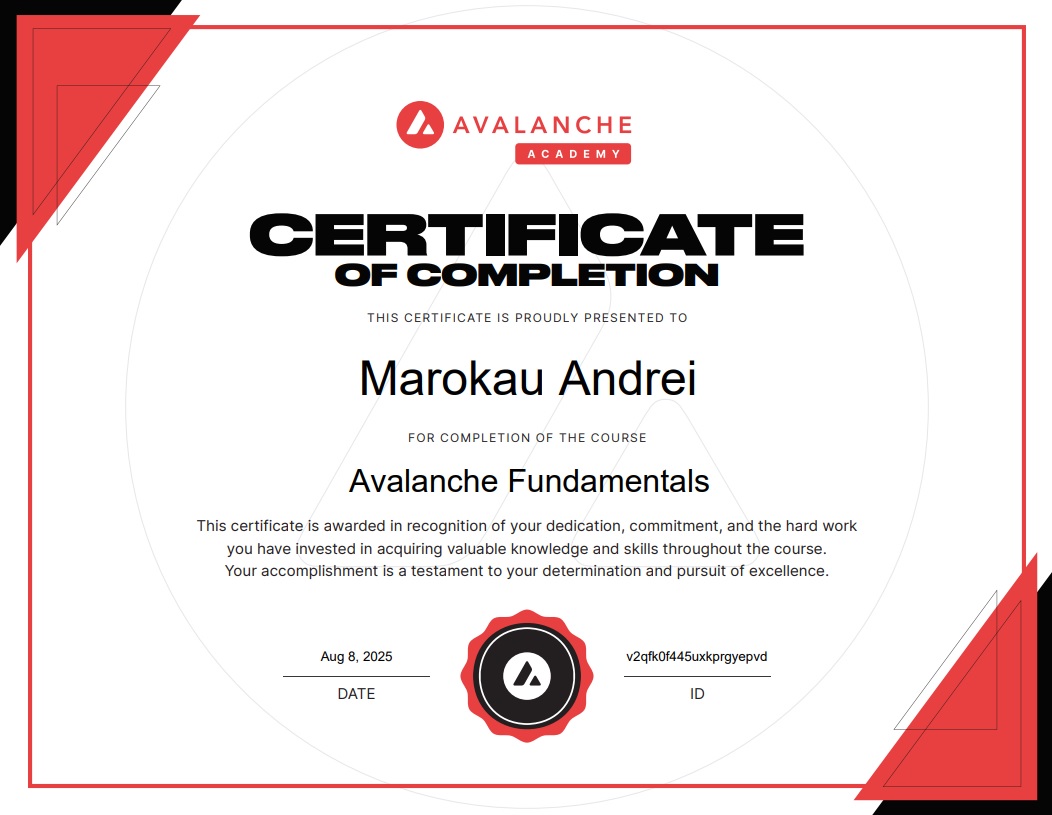
Course “Avalanche Fundamentals”
This online course introducing you to the exciting world of the Avalanche technology! This course will provide you with a comprehensive understanding of the basic concepts making Avalanche unique.
Throughout, you’ll learn the key features and benefits of the platform, plus how to build on it. You can also ask our expert instructors questions.
By the end of these courses, you’ll have the knowledge and skills to leverage the power of blockchain technology for your own projects and applications. We’re excited to have you join us on this journey and can’t wait to see what you’ll create with Avalanche!
By the end of this course, you will:
You can evaluate your own understanding of the material through quizzes and claim a certificate for successful completion at the end.
Overall, this course aims to provide a foundational understanding of Avalanche. By completing it, you will be better prepared to take on more advanced courses focused on building on Avalanche.
Topics
CERTIFICATE OF COMPLETION
Web 3.0 Procurement. Chainlink Ecosystem
Chainlink is a blockchain abstraction layer that enables universally connected smart contracts. Through a decentralized oracle network, Chainlink allows blockchains to securely interact with external data feeds, events and payment methods, providing the critical off-chain information needed by complex smart contracts to become the dominant form of digital agreement.
The Chainlink Network is driven by a large open-source community of data providers, node operators, smart contract developers, researchers, security auditors and more. The company focuses on ensuring that decentralized participation is guaranteed for all node operators and users looking to contribute to the network.
Tokenized assets
Reliable and automated data integration. Attach any type of financial data to tokenized assets and automate updates to increase investor transparency and reduce manual efforts.
Automated compliance. Meet regulatory requirements and internal policies by embedding compliance solutions directly into tokenized assets.
Faster market entry with scalable infrastructure. Accelerate time-to-market and increase global access by securely connecting across any public or private blockchain with a single integration.
Enable digital asset mobility. Seamless connectivity between blockchains and traditional finance. Easily integrate traditional financial systems with blockchains to increase liquidity and market accessibility for institutions and protocols alike.
Real-time data synchronization. Keep tokenized assets updated with real-time valuations and compliance data to support seamless, real-time markets as assets move across chains.
Privacy and security for institutional transactions. Support secure, private cross-chain transactions that protect financial data while ensuring regulatory compliance.
Streamline post-trade operations. Atomic settlement. Create payment-versus-payment (PvP) and delivery-versus-payment (DvP) workflows onchain while mitigating counterparty risks.
Enhanced operational efficiency. Automate post-trade processes to reduce settlement delays, reconciliation errors, and operational costs.
Automated and efficient risk management. Add real-time risk monitoring, automated compliance, and smarter collateral management to transactions to reduce exposure as assets move from one party to another.
StableCoins
Market confidence. Enhance credibility with institutions by building on stablecoin infrastructure recognized across global capital markets for its security, reliability, and operational maturity.
Automated compliance. Support seamless regulatory compliance across jurisdictions with real-time policy enforcement, secure identity management, and streamlined monitoring and reporting.
Secure interoperability. Unlock multi-chain stablecoin distribution through Chainlink’s enterprise-grade interoperability standard, enabling greater market reach without introducing fragmentation risk.
End-to-end reliability. Prevent downtime and disruption with battle-tested infrastructure that supports stablecoin operations at scale.
Operational transparency. Ensure visibility into reserves backing stablecoins with infrastructure that makes reserve validation available onchain.
DeFi utility. Protocols and investors prefer to only list, integrate, and support assets with verifiable backing, enhancing liquidity.
Data-driven minting logic. Anchor stablecoin issuance to real-world asset values for high-integrity operations.
Proof of Reserves enforcement. Accelerate the growth of ecosystems with infrastructure designed to scale securely as networks mature.
Controlled stablecoin issuance. Enforce collateral thresholds, allowlist access, and issuance rules to ensure stablecoins are compliant.
Ecosystem liquidity unlocked. Preferred by DeFi and institutional protocols, making it easier for stablecoins to integrate into high-liquidity environments and access built-in demand.
Blockchain-agnostic movement. Facilitate stablecoin transfers across different blockchain environments with secure delivery and consistent logic.
Seamless value exchange across markets. Move stablecoins between fragmented liquidity venues and infrastructure layers without integration friction or operational overhead.
Programmable transfer logic. Embed transfer conditions directly into smart contracts to automate controls such as allowlisting, rate limits, and jurisdiction-aware routing.
Payment settlement. Use trusted exchange rates and secure messaging to settle stablecoin payments between currencies quickly and at low cost.
Interoperability with global financial infrastructure. Seamlessly settle transactions using existing payment rails, from market infrastructures to fintech platforms.
Compliance focused. Automatically apply sanctions screening, jurisdiction rules, and audit logging to stablecoin transfers at the point of settlement.
DeFi
Most decentralized and secure. Chainlink oracle networks are secured by node operators running security-audited software that has been rigorously validated to operate at scale without downtime or corruption.
Highest quality data, resistant to manipulation. Data is sourced from multiple premium, authenticated APIs that are aggregated into a final validated answer, removing any single point of failure.
Most widely adopted oracle network in DeFi. The Chainlink Network helps secure tens of billions of dollars within the DeFi ecosystem by connecting hybrid smart contracts with high-quality data and offchain computation.
Rapid integration and deployment. Developers can rapidly build, test, and deploy advanced DeFi applications that leverage multiple external resources using pre-built and reliable decentralized services.
A diverse range of decentralized services. Chainlink powers numerous decentralized services, including Data Feeds, Proof of Reserve, Automation, Verifiable Randomness Function, and Cross-Chain Interoperability.
Blockchain-agnostic oracle networks. Developers building DeFi applications have access to external data and computation across all leading smart contract-enabled blockchain networks to support multi-chain development.
Web 3.0 Procurement. Binance Ecosystem
BNB is the native coin of the BNB Chain ecosystem, essential for powering its multifaceted Web3 environment. It supports transactions on the BNB Smart Chain (BSC), the opBNB L2s, and BNB Greenfield . Besides transaction fees, BNB serves as a governance token, granting holders the ability to participate in the BNB Chain’s decentralized on-chain governance.
Additionally, BNB functions as a strategic reserve asset and plays a critical role in the BNB Executive Total Value Locked (TVL) campaign, driving ecosystem growth and incentivizing adoption.
Real World Assets Tokenization
Real World Assets (RWAs) in crypto involve tokenizing physical assets like real estate, receivables, and loans on blockchain. Tokenizing real-world assets (RWAs) involves converting ownership rights of physical assets into digital tokens on a blockchain. It provides liquidity for your tangible assets and creates better cash flow for you.
BNB Chain Payment Solution
Still trying to figure out how to integrate BNB Chain payment gateways into your business? Still confused about where you could spend your cryptos? You come to the right place.
Web 3.0 Procurement. Avalanche Ecosystem
Avalanche is a layer one blockchain that functions as a platform for decentralized applications and custom blockchain networks. It is one of Ethereum’s rivals, aiming to unseat Ethereum as the most popular blockchain for smart contracts. It aims to do so by having a higher transaction output of up to 6,500 transactions per second while not compromising scalability.
This is made possible by Avalanche’s unique architecture. The Avalanche network consists of three individual blockchains: the X-Chain, C-Chain and P-Chain. Each chain has a distinct purpose, which is radically different from the approach Bitcoin and Ethereum use, namely having all nodes validate all transactions. Avalanche blockchains even use different consensus mechanisms based on their use cases.
After its mainnet launch in 2020, Avalanche has worked on developing its own ecosystem of DApps and DeFi. Different Ethereum-based projects such as SushiSwap and TrueUSD have integrated with Avalanche. Furthermore, the platform is constantly working on improving interoperability between its own ecosystem and Ethereum, like through the development of bridges.
Business & Consumer Applications
Avalanche accelerates blockchain business growth by enabling fast, scalable Web3 application development. The Avalanche network is a system of interconnected Layer 1 blockchains, linked through native Interchain Messaging. With built-in customizability and out-of-the-box tooling, projects on Avalanche can scale both up and across the network. Avalanche L1s offers tailored technology for real-world needs.
DeFi on Avalanche
Avalanche’s ultra-fast, low-latency network provides the building blocks for a scalable, efficient and cost-effective financial system on-chain. Avalanche supports everything from dynamic trading strategies to programmable stablecoins, while customizable Layer 1s (L1s) allow institutions to deploy tailored, compliance-aware environments.
Infrastructure on Avalanche
Avalanche is all about scalable and interoperable blockchains, facilitated by Avalanche’s native Interchain Messaging (ICM) feature. Avalanche is the multi-chain platform helping build a scalable Web3 universe—designed with precision control over execution, validation, and cross-chain interoperability. Interchain Messaging enables communication across the layer 1 multiverse for interoperability out-of-the-box.
Web 3.0 Procurement. Cardano Ecosystem
Cardano is a groundbreaking blockchain platform that uses proof-of-stake technology to create a more sustainable and accessible financial system. It stands out for its research-first approach and scientific philosophy, making it highly secure and energy-efficient. The platform aims to provide reliable financial services to everyone, including those currently without access to traditional banking. Since its inception, it has evolved into one of the leading blockchain platforms, processing millions of transactions while maintaining its commitment to sustainability and academic rigor.
Retail
Counterfeit goods pose a significant challenge to the global economy, causing financial losses, eroding brand reputation, and reducing customer trust. Cardano’s blockchain offers a tamper-proof solution to combat counterfeiting by providing secure, immutable systems for tracking product provenance and ensuring authenticity. Businesses can certify the originality of their products, enabling consumers to verify authenticity instantly and building confidence in the supply chain.
Supply Chain Management
Supply chains often lack transparency and efficiency, leading to counterfeit goods, poor quality control, and increased costs. Cardano’s blockchain enables real-time tracking and verification of goods. Companies can record every step of a product’s journey, from origin to destination, ensuring authenticity and improving logistical processes.
Smart Contract
Cardano introduced smart contracts in 2021 and now supports the development and deployment of smart contracts using multiple different languages.
Web 3.0 Procurement. Polkadot Ecosystem
Polkadot is an open-source sharded multichain protocol that connects and secures a network of specialized blockchains, facilitating cross-chain transfer of any data or asset types, not just tokens, thereby allowing blockchains to be interoperable with each other. Polkadot was designed to provide a foundation for a decentralized internet of blockchains, also known as Web3.
Polkadot is known as a layer-0 metaprotocol because it underlies and describes a format for a network of layer 1 blockchains known as parachains (parallel chains). As a metaprotocol, Polkadot is also capable of autonomously and forklessly updating its own codebase via on-chain governance according to the will of its token holder community.
Polkadot provides a foundation to support a decentralized web, controlled by its users, and to simplify the creation of new applications, institutions and services.
The Polkadot protocol can connect public and private chains, permissionless networks, oracles and future technologies, allowing these independent blockchains to trustlessly share information and transactions through the Polkadot Relay Chain (explained further down).
Polkadot’s native DOT token serves three clear purposes: staking for operations and security, facilitating network governance, and bonding tokens to connect parachains .
Smart Contract
Polkadot offers developers flexibility in building smart contracts, supporting both Wasm-based contracts using ink! (written in Rust) and Solidity contracts executed by the EVM (Ethereum Virtual Machine).
Web 3.0 Procurement. Algorand Ecosystem
Algorand is a self-sustaining, decentralized, blockchain-based network that supports a wide range of applications. These systems are secure, scalable and efficient, all critical properties for effective applications in the real world. Algorand will support computations that require reliable performance guarantees to create new forms of trust.
DeFi
Ultra-low transaction fees and instant finality make DeFi applications on Algorand accessible and highly efficient. Algorand’s Pure Proof-of-Stake consensus mechanism offers a secure and decentralized environment for DeFi applications. Bridge assets to and from Algorand through robust interoperability solutions, connecting Algorand to other blockchains and the outside world. Algorand is scalable by design, ensuring its DeFi protocols can handle high transaction fees without compromising speed or cost.
Tokenized real-world assets
Tokenization reduces reliance on intermediaries, lowering costs and streamlining operations. Tokenization opens up investments to broader audiences, promoting financial inclusion. Blockchain ensures clear ownership and transfer history for tokenized assets. Enhanced access through tokenization drives increased liquidity, making assets easier to trade.
Data traceability & tracking solutions
Algorand’s Pure Proof-of-Stake consensus mechanism fosters a secure and decentralized environment for data traceability and tracking applications. PPoS is built to scale—meaning it can handle high transaction throughput without compromising speed or cost. Algorand’s fast block time and instant finality translate to near real-time data traceability. This ensures updates are recorded quickly and irreversibly, offering a secure and trustworthy audit trail for tracked information. Algorand’s low transaction fees make it suitable for scenarios where frequent data tracking is required. This may be ideal for applications like supply chain management, where every step of a product’s journey needs to be documented.
Stablecoins, digital money & payment solutions
Transaction fees on Algorand are incredibly low at 0.001 Algo per transaction, making it a viable option for everyday purchases and microtransactions. Stablecoins on Algorand are accessible to all, even those without a bank account. Anyone in the world can set up a mobile crypto wallet and gain access. Algorand users can transact with price-stable assets, lowering cryptocurrency volatility concerns. Algorand’s Pure Proof-of-Stake consensus mechanism delivers a secure and decentralized environment for digital money and payment solutions. Algorand is scalable by design, ensuring applications can handle high transaction volume without compromising speed or cost. With custom smart contract support, Algorand enables developers to build innovative payment solutions and integrate them seamlessly with existing systems.
Smart Contracts
Algorand Smart Contracts (ASC1) are self-executing programs deployed on the Algorand blockchain that enable developers to build secure, scalable decentralized applications. Smart contracts on Algorand can be written in Algorand Typescript, Algorand Python, or directly in TEAL. Smart contract code written in Typescript or Python is compiled to TEAL, an assembly-like language that is interpreted by the Algorand Virtual Machine (AVM) running within an Algorand node.
Web 3.0 Procurement. Solana Ecosystem
Solana is a highly functional open source project that banks on blockchain technology’s permissionless nature to provide decentralized finance (DeFi) solutions. The Solana protocol is designed to facilitate decentralized app (DApp) creation. It aims to improve scalability by introducing a proof-of-history (PoH) consensus combined with the underlying proof-of-stake (PoS) consensus of the blockchain. Because of the innovative hybrid consensus model, Solana enjoys interest from small-time traders and institutional traders alike. A significant focus for the Solana Foundation is to make decentralized finance accessible on a larger scale.
Smart Contract
On Solana, “smart contracts” are called programs. Programs are deployed on-chain to accounts that contain the program’s compiled executable binary. Users interact with programs by sending transactions containing instructions that tell the program what to do.
Solana programs are predominantly written in the Rust programming language, with two common approaches for development:
Anchor: A framework designed for Solana program development. It provides a faster and simpler way to write programs, using Rust macros to reduce boilerplate code. For beginners, it is recommended to start with the Anchor framework.
Native Rust: This approach involves writing Solana programs in Rust without leveraging any frameworks. It offers more flexibility but comes with increased complexity.
Web 3.0 Procurement. Ethereum Ecosystem
Ethereum is a decentralized open-source blockchain system that features its own cryptocurrency, Ether. ETH works as a platform for numerous other cryptocurrencies, as well as for the execution of decentralized smart contracts.
Ethereum’s own purported goal is to become a global platform for decentralized applications, allowing users from all over the world to write and run software that is resistant to censorship, downtime and fraud.
DeFi
DeFi is an open and global financial system built for the internet age – an alternative to a system that’s opaque, tightly controlled, and held together by decades-old infrastructure and processes. It gives you control and visibility over your money. It gives you exposure to global markets and alternatives to your local currency or banking options. DeFi products open up financial services to anyone with an internet connection and they’re largely owned and maintained by their users. So far tens of billions of dollars worth of crypto has flowed through DeFi applications and it’s growing every day.
DAO
A DAO is a collectively-owned organization working towards a shared mission. DAOs allow us to work with like-minded folks around the globe without trusting a benevolent leader to manage the funds or operations. There is no CEO who can spend funds on a whim or CFO who can manipulate the books. Instead, blockchain-based rules baked into the code define how the organization works and how funds are spent. They have built-in treasuries that no one has the authority to access without the approval of the group. Decisions are governed by proposals and voting to ensure everyone in the organization has a voice, and everything happens transparently onchain.
Payments
While traditional financial institutions have built robust payment systems over decades, they often remain constrained by borders, working hours, and legacy infrastructure. Ethereum offers a new paradigm: a global, 24/7 financial platform that enables near-instant, programmable transactions for anyone with internet access.
Smart contract
A “smart contract” is simply a program that runs on the Ethereum blockchain. It’s a collection of code (its functions) and data (its state) that resides at a specific address on the Ethereum blockchain. Smart contracts are a type of Ethereum account. This means they have a balance and can be the target of transactions. However they’re not controlled by a user, instead they are deployed to the network and run as programmed. User accounts can then interact with a smart contract by submitting transactions that execute a function defined on the smart contract. Smart contracts can define rules, like a regular contract, and automatically enforce them via the code. Smart contracts cannot be deleted by default, and interactions with them are irreversible.
The two most active and maintained languages are:
Solidity
Vyper
World Bank Academy
10.06.2018
Online Educational Course “e-Procurement Learning”
This e-Learning course is designed to provide participants with an in-depth understanding of the concept of public procurement and e-Government Procurement (e-GP) and how e-Procurement solutions can be designed and implemented in a more effective and economical way. This course outlines how to prepare a strategy for establishing an e-GP framework and presents in detail basic and advanced tools of e-Procurement systems. Moreover, it describes the need for the establishment and use of public procurement indicators, as well as how public financial management can be strengthened through the incorporation of procurement and e-Procurement into PFM reform projects.
Course overview
E-Government procurement (e-GP) projects are often part of the wider e-government efforts of countries to efficiently and effectively serve their citizens and businesses. E-GP promotes better governance in public procurement by increasing transparency and eliminating opportunities for fraud and corruption. The application of ICT to procurement processes has resulted in e-Procurement platforms that are ideally suited to address the e-GP objectives.
Pursuing an e-Procurement system implementation is an effective way to improve public procurement management, through the automation of all underlying processes. Many governments worldwide have adopted end-to-end e-Procurement systems which cover the full procurement cycle.
The current e-Learning course is composed of five modules, aiming to assist its audience to better understand electronic procurement and provide them with guidance on decisions they may need to take for establishing or improving the e-GP framework of their countries.
The course initially focuses on how organizations can establish a plan for an e-GP implementation, and what benefits can be expected by such an implementation project. Furthermore it provides an overview of the basic and advanced features and modules of e-Procurement systems, along with concise information on how to implement each of the described e-Procurement modules.
Additionally, the course briefly describes e-Procurement indicators and presents how these can be used by governments in order to measure adoption, performance and overall governance. Lastly, it focuses on how to incorporate procurement and e-procurement into FMIS implementations in the context of PFM reform projects.
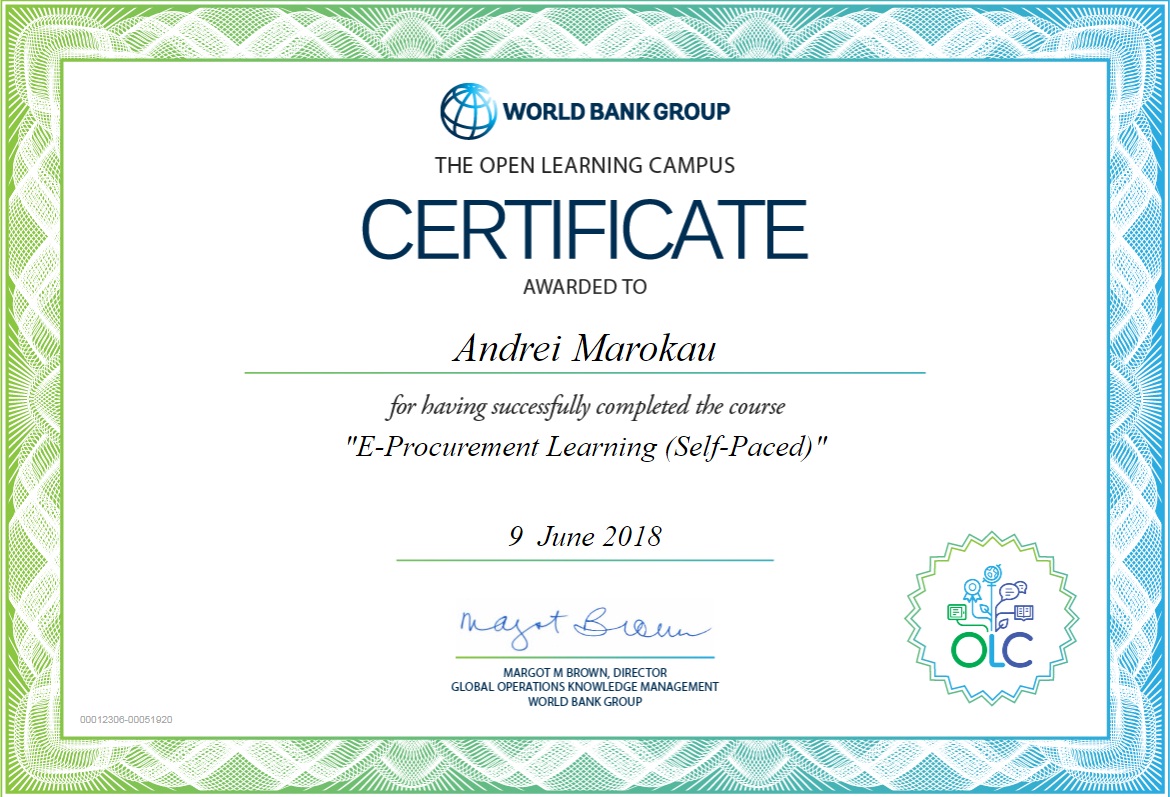
At the end of this course, a certification can be obtained by those participants who complete the course and successfully pass the respective examination.
Course features
The course is composed of the following modules:
Target audience
The learners should at least have an understanding of the national public procurement setting and the EU public procurement procedures as well as a high-level view of web-based applications and software implementation projects.
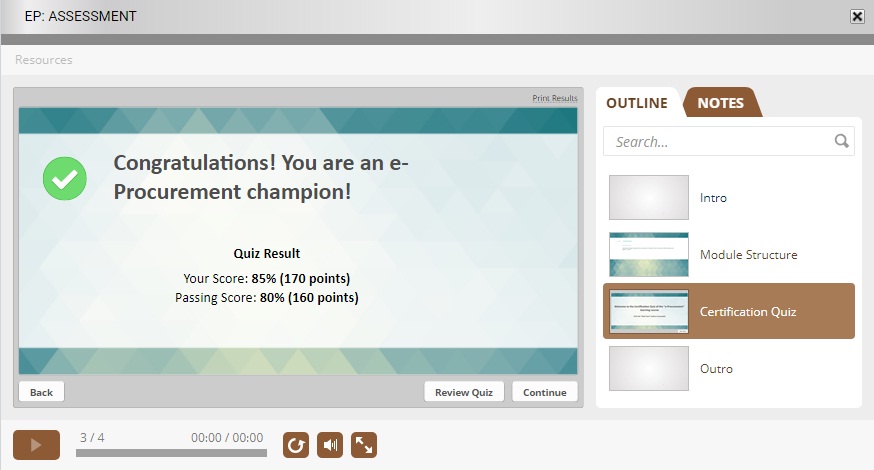
Score
Certificate
 morokoff